A new study was recently published by one of our very own researchers, Haley McIlwraith, on the contamination of microplastics in some of the remote boreal lakes at the IISD-Experimental Lakes Area.
A team of researchers set out in 2019 to investigate the baseline concentrations of microplastics in remote boreal lakes, and the pathways in which microplastics find their way there. The IISD-Experimental Lakes Area (IISD-ELA) is considered the world’s freshwater laboratory, with 58 pristine lakes set aside for experimental research. The field station is located 30km down a gravel road, East of Kenora in northwestern Ontario. This study was the first stage of the pELAstic project to understand the background contamination of microplastics in lakes at IISD-ELA where we have been conducting limnocorral experiments and a whole-lake manipulation study.
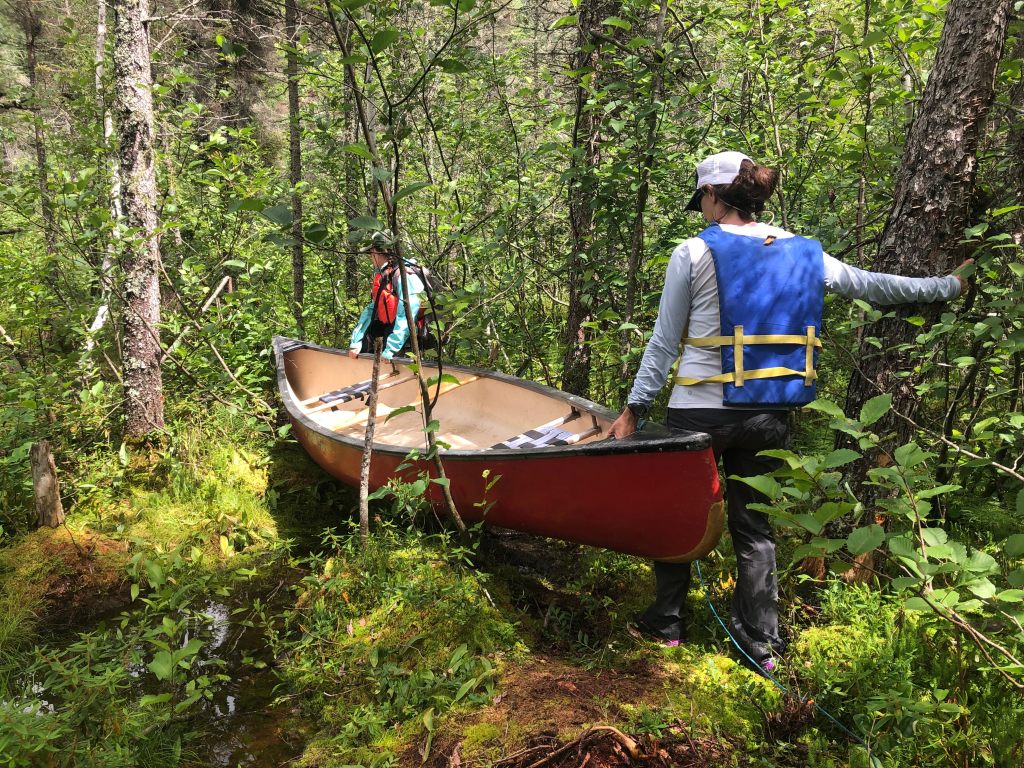
Haley and a small team of researchers sampled 9 different lakes with varying amounts of human activity, some lakes so remote they were only accessible via portaging a canoe. Sediments, surface water, and atmospheric deposition were sampled at each lake. Microplastics were found in every one of the 9 lakes that were sampled! Fibers were the most common microplastic type found across all the lakes sampled. The most likely source of these microplastics is thought to be atmospheric deposition. You can read more about Haley McIlwraith’s results in her published paper here: https://doi.org/10.1002/etc.5832


 The pELAstic Project