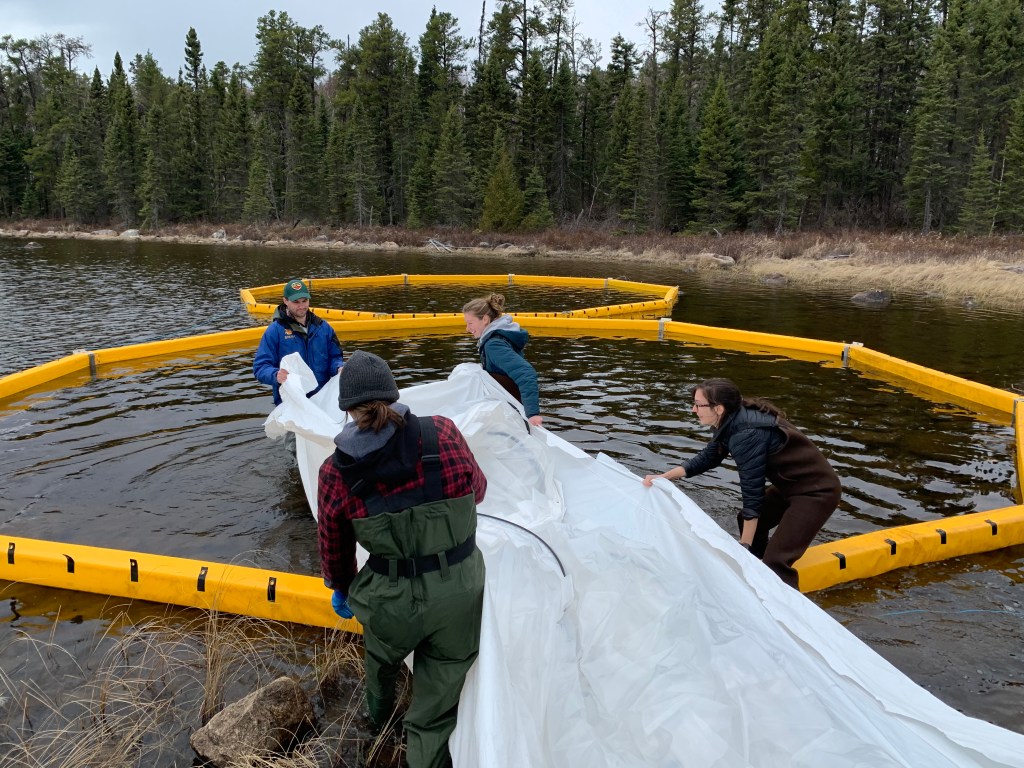
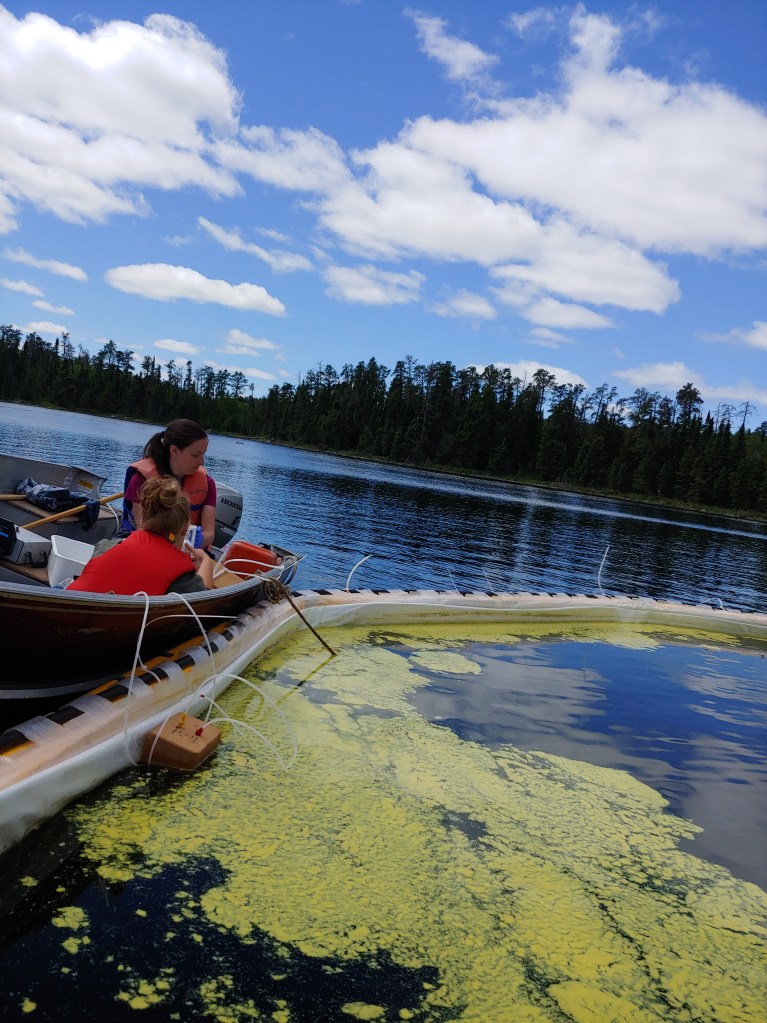
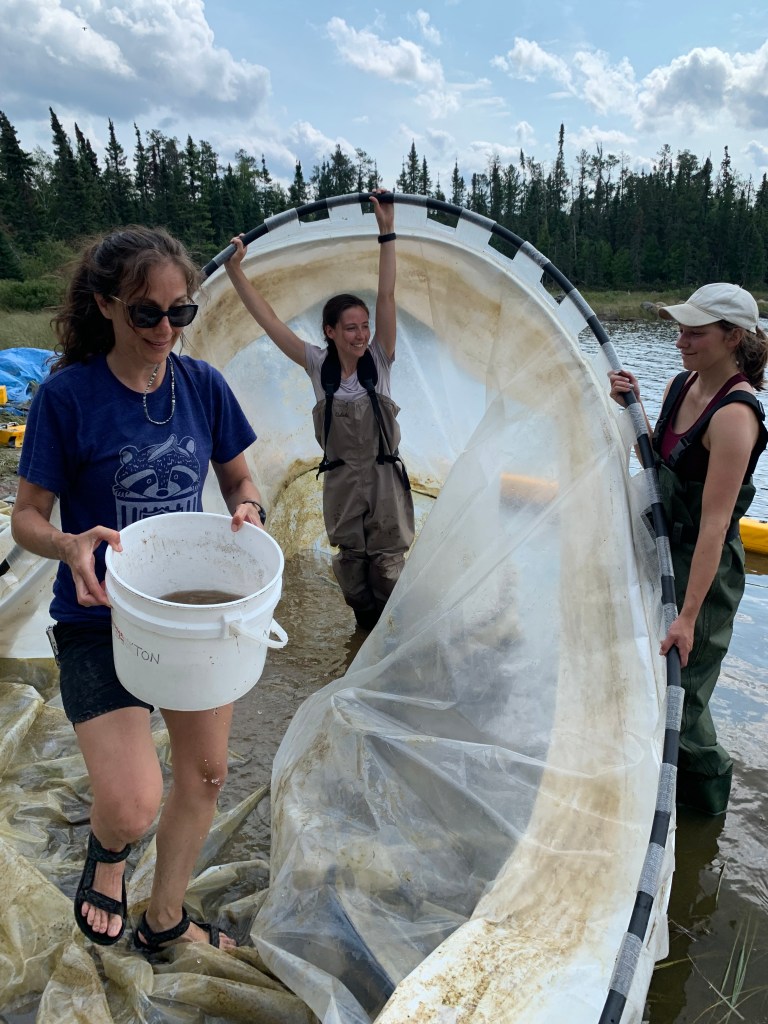
In 2021 we conducted a large-scale in-lake mesocosm experiment as part of the pELAstic project to investigate the fate and effects of microplastics in freshwater ecosystems. These large in-lake mescosms are also referred to as limnocorrals and they can help scientists better understand the impacts of contaminants under more realistic conditions compared to a laboratory. We built 9 mesocosms in total, each 10 m wide by 2 m deep, that were closed-bottom and deployed in Lake 378, an experimental lake at IISD-ELA. A mixture of 3 different types of microplastics (polyethylene, polystyrene, and polyethene terephthalate) varying in colour and buoyancy were added to 7 of the mesocosms in a range of concentrations, while 2 of the mesocosms were used as controls (no added microplastics). In the mesocosms there were natural communities of microbes, phytoplankton, zooplankton and fish from the lake. We monitored the mescosms for 10 weeks to assess the fate and effects of the microplastics.
A big question we had was where the microplastics would end up. The majority of the microplastics were not in the water column or in the biota, but likely at the surface and on the bottom due to varying buoyancies of the plastic types. You can read more about the results of this study here: https://pubs.acs.org/doi/10.1021/acs.est.3c08990. This is part 1 in series of publications to come, which will further explore the fate of microplastics more in depth in the biota and how the microplastics impacted various pelagic organisms.

 The pELAstic Project