What is a limnocorral?

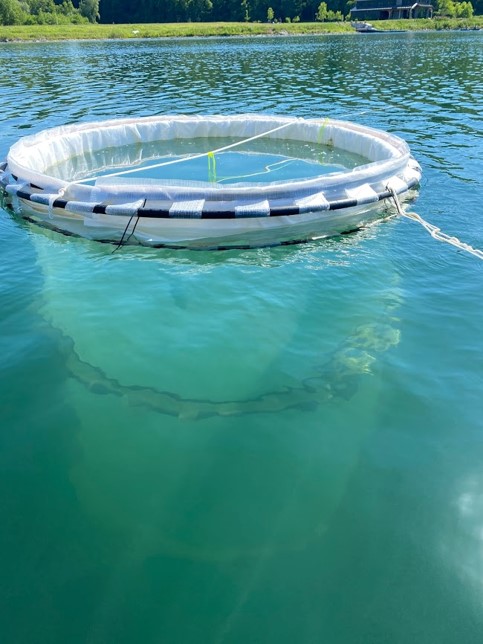
A limnocorral is a large enclosure or mesocosm that is self contained in a lake. Each limnocorral is essentially its own small ecosystem, which scientists can use to research the fate and effects of contaminants, such as microplastics. Using limnocorrals is a great way to learn more about environmentally-relevant fate and ecologically-relevant effects on populations and communities of organisms – which is difficult to study in a laboratory. These types of studies can help inform policy around ecological risk.
Fate Limnocorral
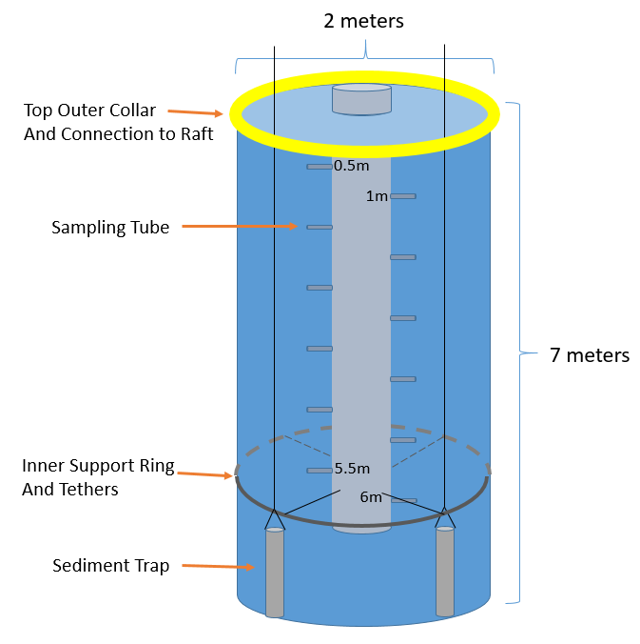
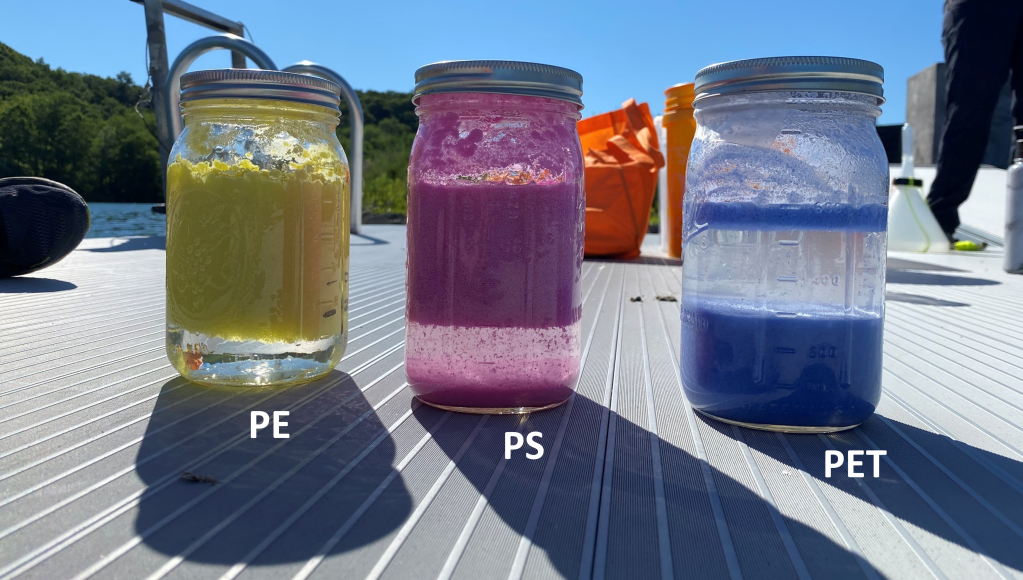
In 2021 we used a fate limnocorral to explore the vertical transport and distribution of microplastics in a lake. This research was conducted at Tait Preserve, a 70-acre lake on a former sand quarry in Penfield, NY. This experiment consisted of a single limnocorral that was 2 m in diameter and 7 m deep. The fate limnocorral was dosed with a mixture of PE, PS and PET microplastics, each type varying in colour and buoyancy to help trace the different plastics in the water column. A 6 m long sampling tube was used to sample microplastics in the water column at different depths, and sediment traps were used to collect sinking microplastics. The fate of the microplastics was monitored for 78 days.


Pelagic Limnocorrals
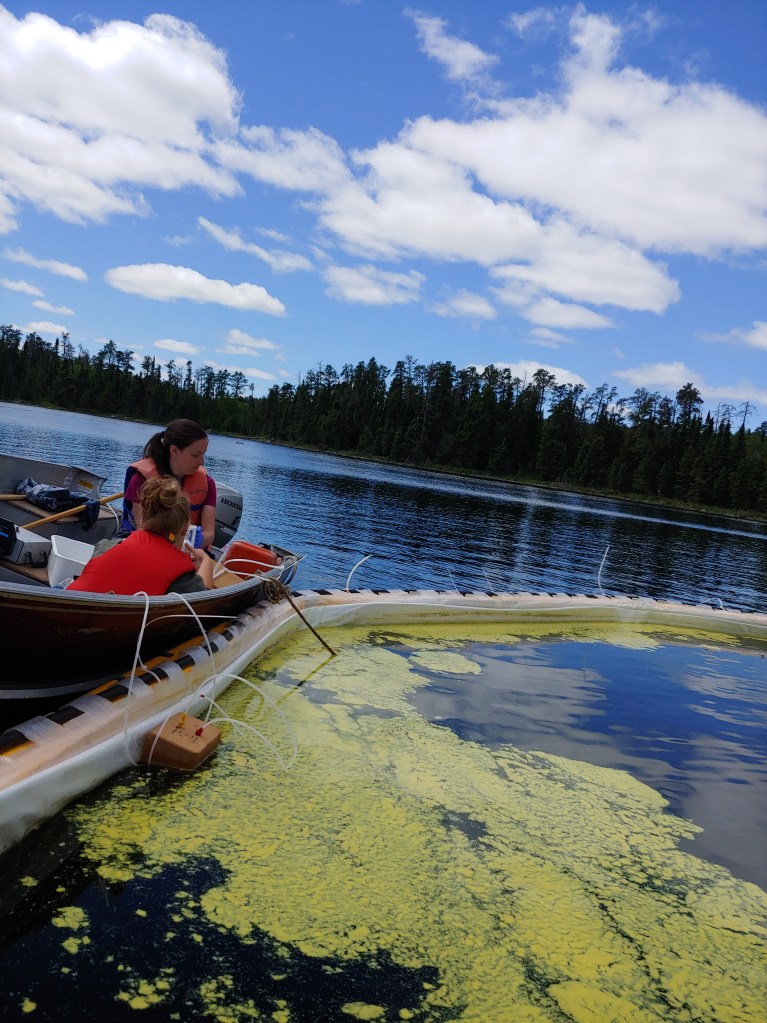
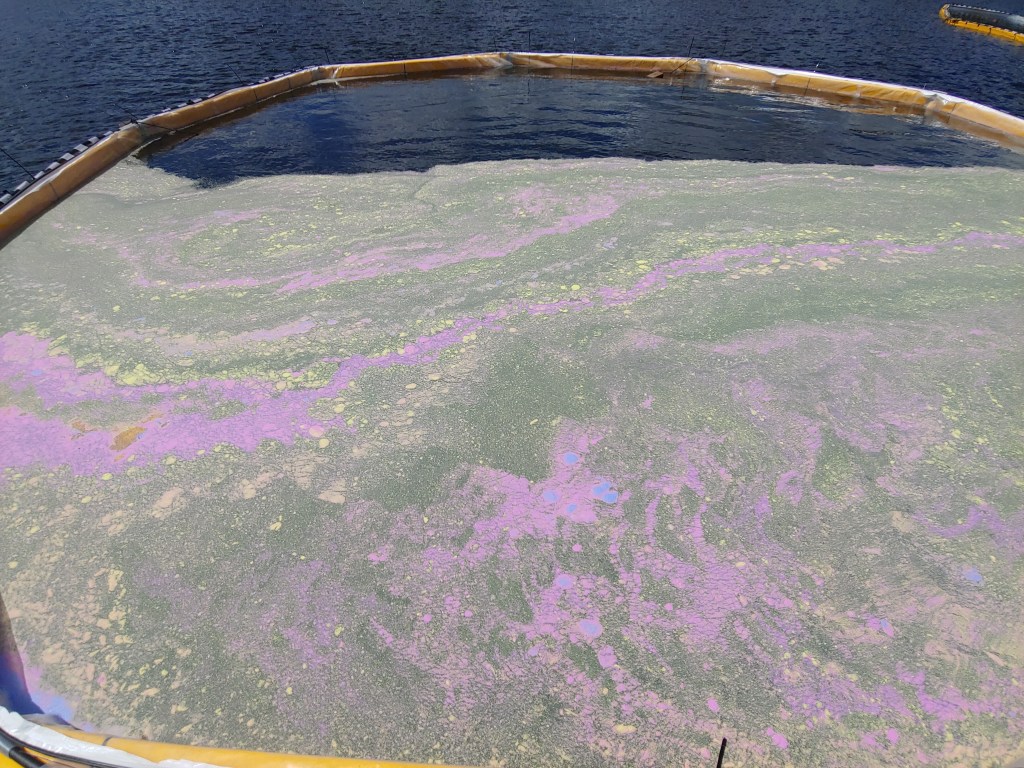
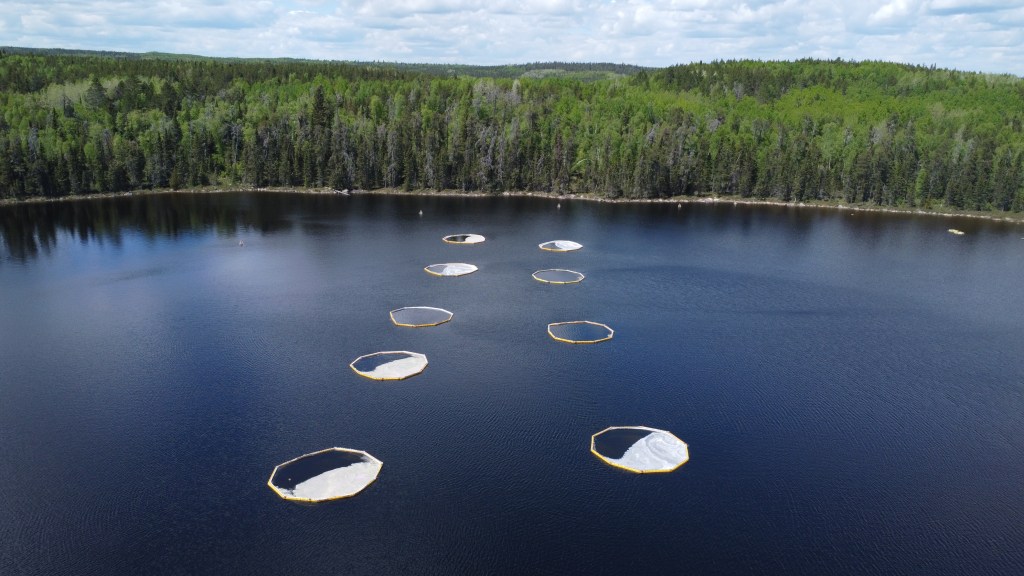
Pelagic limnocorrals were used in 2021 and 2022 to assess the fate and effects of microplastics in freshwater lakes. These experiments were conducted at the IISD-Experimental Lakes Area in northwestern Ontario. These limnocorrals simulate the pelagic (think deep open water) area of a lake. We wanted to learn about the fate of microplastics and their additive chemicals, how microplastics impact water quality, and how microplastics affect the different types of organisms that live in pelagic zones of freshwater lakes (e.g., zooplankton, algae, fish). The pelagic limnocorrals we deployed were 10 m in diameter and 2 m deep and completely contained within the water column (i.e., not open to the sediment).
2021 pelagic limnocorrals
This experiment used a regression design to assess the impacts of a range of environmentally relevant microplastic concentrations. A mixture of common plastic polymers (PE, PS, and PET) were added to limnocorrals that varied in colour and buoyancy to help trace where the plastics ended up. Our team monitored the water quality and the organisms (microbiota, periphyton, phytoplankton, zooplankton, fish) in the limnocorrals for 10 weeks.


2022 pelagic limnocorrals
This experiment used an ANOVA design to assess the chemical and physical impacts of microplastics on pelagic ecosystems. We used microplastics containing chemical additives and compared them to microplastics with no chemical additives and a negative control (i.e., three treatments, n = 3). The fate of the microplastics and their additives, as well as the water quality and organisms (microbiota, periphyton, phytoplankton, zooplankton, fish) were monitored for 9 weeks.

Littoral Limnocorrals
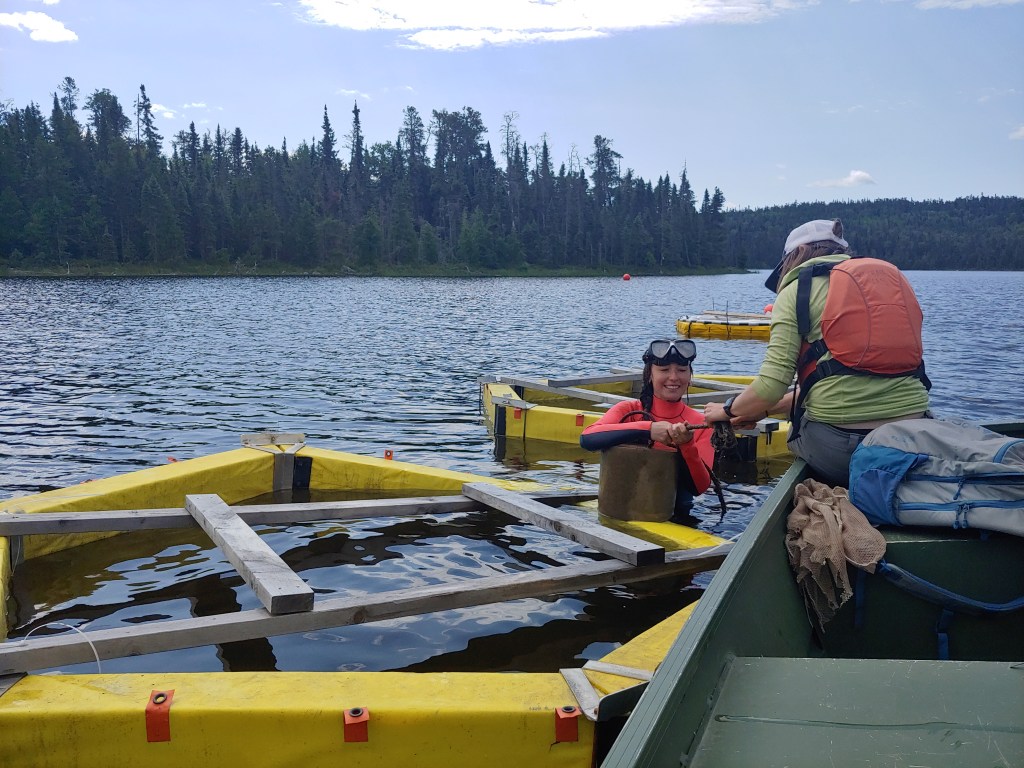
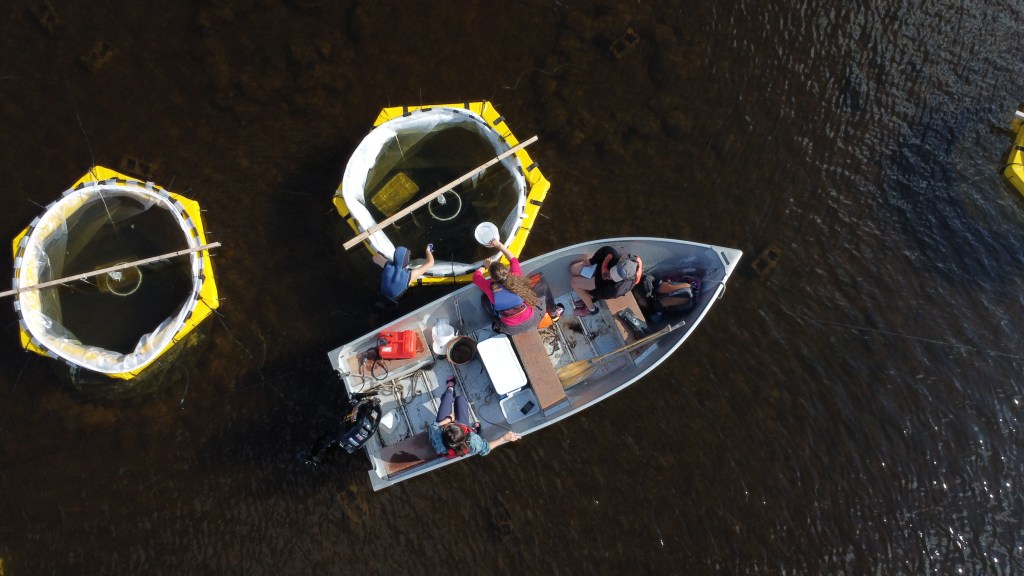
Littoral limnocorrals were used in 2022 to understand how microplastics interact with and impact the littoral (think shallow water) zone of a lake. This experiment also took place at the IISD-Experimental Lakes Area. We wanted to learn how microplastics impact the water, sediment and organisms living in littoral zones of a lake (benthic invertebrates, emergent insects and zooplankton). Littoral limnocorrals are 2 m in diameter and 1 m deep, secured to the sediment with sandbags to allow incorporation of sediment dwelling organisms. For this experiment we used the same mixture of microplastics (PE, PS, PET) as above, added in a range of concentrations using a regression design.

 The pELAstic Project